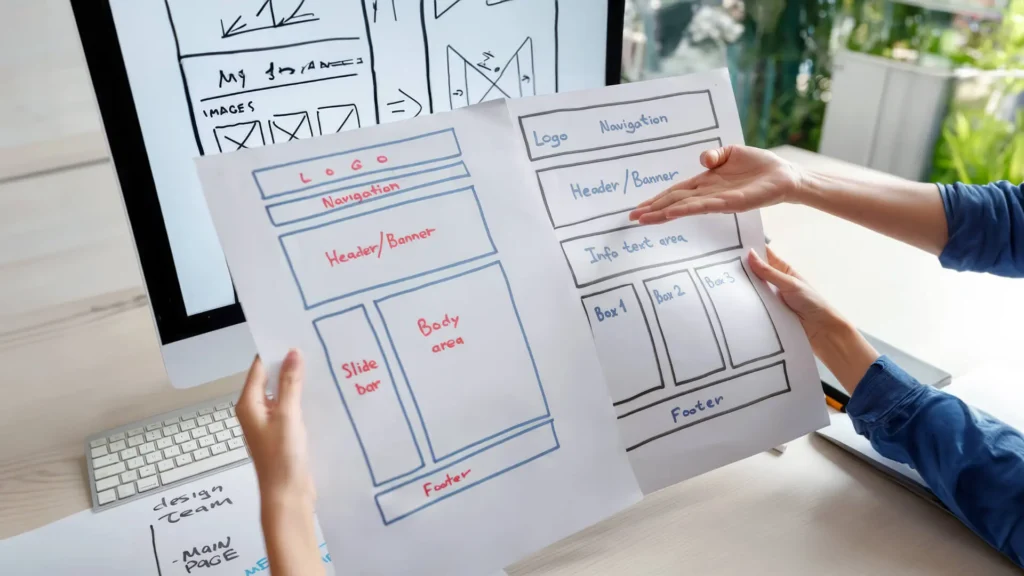
Outdated Design Is Costing You Credibility
Visual perception shapes trust in seconds. A website that looks like it was built five years ago sends the wrong message — that your business is behind, unreliable, or stagnant. In competitive markets, where prospects compare multiple options before converting, first impressions are everything. A dated design tells visitors your brand hasn’t kept up, which is a serious credibility risk in 2025’s fast-moving digital landscape.
The solution isn’t just to make it “look better” — it’s about aligning design with business goals. Modern redesigns focus on clean UX, mobile-first responsiveness, lightning-fast loading, and a brand identity that communicates authority and clarity. The right design creates trust, which directly impacts lead quality and conversion rates.
- Users judge design in under 0.05 seconds
- Outdated visuals increase bounce rates up to 38%
- Mobile-first design is now a ranking factor
Your Site Isn’t Driving Conversions — That’s a Problem
If you’re getting traffic but not leads or sales, your website isn’t doing its job. In 2025, a website must be a high-performance sales tool — not just a digital brochure. A poorly structured funnel, confusing CTAs, and unoptimized forms silently kill your conversion rate, no matter how good your offer is.
A redesign focused on CRO (Conversion Rate Optimization) can radically increase your return without spending more on ads. The key is data-driven structure: heatmaps, user flows, A/B testing, and persuasive UX writing. When design serves business logic, you turn passive visitors into active leads.
Poor Mobile Experience = Lost Revenue
Mobile traffic now accounts for over 65% of all website visits. If your mobile experience is clunky, slow, or hard to navigate, you’re leaving money on the table. Google’s mobile-first indexing penalizes non-optimized pages, and users simply bounce if a site takes more than 3 seconds to load or doesn’t feel intuitive on mobile.
Redesign means going beyond responsiveness — it means designing for mobile-first from the ground up. Navigation, button size, content hierarchy, and page speed all need to be engineered for small screens. The payoff is significant: improved SEO, longer session durations, and higher conversion rates from mobile users.
- Pages that load in 1s convert 3x better than those loading in 5s
- Mobile UX is now more critical than desktop for most B2C and B2B brands
Your Brand Has Grown — But Your Website Hasn’t
Many businesses scale operations, expand services, or redefine their market — but forget to align their website with this growth. As a result, messaging becomes fragmented, structure chaotic, and the site no longer reflects your company’s real value. This creates friction in your funnel and reduces your perceived authority.
A redesign gives you a chance to realign content, positioning, and customer journey with your current business model. It’s about clarity, structure, and storytelling that actually reflects who you are now — not who you were 3 years ago. Strong, consistent messaging builds trust and removes decision barriers for potential clients.
Technical Debt Is Slowing You Down
Over time, websites accumulate “technical debt” — outdated plugins, clunky architecture, inefficient code. This slows down load times, creates bugs, and makes updates risky or expensive. In worst-case scenarios, technical limitations prevent you from scaling features or integrating tools you need to grow.
Redesigning from a modern, clean foundation (like Elementor Pro or modern WordPress frameworks) future-proofs your digital infrastructure. You gain speed, scalability, and easier maintenance. Investing in a clean rebuild often saves more long-term than constantly patching old code and fighting fires.
- Faster load times = better UX and SEO
- Modern frameworks improve security and update compatibility
- Clean architecture enables better analytics and integrations
You’re Ready to Scale — Your Site Isn’t
A scalable business needs a scalable website. If your current platform or structure limits your ability to add landing pages, launch products, run campaigns, or localize content — you’ve outgrown your site. Stagnant architecture creates bottlenecks and slows marketing velocity.
Modern redesigns solve for scale: modular layouts, dynamic content systems, multilingual frameworks, and CMS control where it matters. This empowers your team to execute faster, test more, and respond to market shifts instantly — without waiting weeks on developers. In a scaling phase, speed is profit.
Conclusion: Redesign Is a Growth Lever, Not a Cosmetic Choice
Website redesign isn’t just about aesthetics — it’s a strategic growth move. In 2025, every part of your digital presence must work toward conversion, trust, and scale. If your site isn’t aligned with where your business is headed, it’s actively holding you back. A smart redesign enhances brand perception, optimizes conversions, reduces technical risks, and prepares your business for aggressive growth. WebQuad helps companies like yours turn outdated websites into high-performing digital assets built for ROI. Ready to move forward? Let’s talk.